Category: Uncategorized

  • The Evolution of UI/UX in Outcome-Oriented Models: Innovations Shaping Experiences with AI.

    The Evolution of UI/UX in Outcome-Oriented Models: Innovations Shaping Experiences with AI.

    Introduction:

    In the era of outcome-oriented models driven by AI and ML technologies, the landscape of UI/UX design is undergoing a profound transformation. As products and industries embrace declarative, outcome-driven approaches, the design principles governing user interfaces and experiences are evolving to meet the demands of a more personalized, intuitive, and context-aware digital world. Let’s explore how UI/UX may change in various industries and products:

    1. Personalization at Scale:

    • Outcome-Oriented Design: UI/UX designers are tasked with creating interfaces that prioritize user outcomes over predefined workflows. This shift towards outcome-oriented design requires a deeper understanding of user preferences, behaviors, and contexts to deliver personalized experiences.
    • Example: E-commerce platforms leverage AI-driven recommendation engines to personalize product discovery and shopping experiences based on individual preferences, browsing history, and purchase patterns, enhancing user engagement and conversion rates. Example from Walmart. Amazon employs AI-driven recommendation engines to personalize product discovery and shopping experiences for individual users, resulting in higher engagement and conversion rates.

    2. Context-Aware Interfaces:

    • Outcome-Oriented Design: UI/UX designers focus on building interfaces that adapt to users’ contexts and intentions, providing relevant information and features based on real-time data and situational cues. (Dynamic UI’s)
    • Example: Navigation apps like Google Maps utilize location data and machine learning algorithms to deliver context-aware directions and recommendations, optimizing the user experience for different travel scenarios and preferences. In CRM systems when the user will have contextual screens which will keep disappearing as the journey follows, for the JTBD’s and the goals the hyperpersonalised UI’s will keep guiding.

    3. Conversational Interfaces:

    • Outcome-Oriented Design: UI/UX designers design interfaces that facilitate natural language interactions, enabling users to communicate with AI-powered virtual assistants and chatbots to achieve specific outcomes.
    • Example: Virtual assistants like Amazon Alexa and Google Assistant offer conversational interfaces that allow users to perform tasks, get information, and control smart devices using voice commands, enhancing convenience and accessibility. This is how Walmart is using conversational AI. Also, for CRM case, a conversational bot to help the user continuously with the next goals and relevant JTBD for the them. The bot enabling them to fill forms/information needed to guide them, also guide them unlock more complex features.

    4. Data Visualization for Insights:

    • Outcome-Oriented Design: UI/UX designers create interfaces that present data and insights in a visually compelling and easy-to-understand manner, empowering users to derive actionable insights and make informed decisions.
    • Example: Business intelligence dashboards leverage interactive data visualizations and storytelling techniques to present complex analytics and trends, enabling users to uncover insights and drive strategic decisions effectively. Here I have personally used many tools to get text and visual outputs using simple conversational AI, think (ChatGPT analytics and visualization).

    5. Seamless Multi-Channel Experiences:

    • Outcome-Oriented Design: UI/UX designers craft interfaces that provide consistent and seamless experiences across multiple channels and devices, ensuring continuity and coherence in the user journey.
    • Example: Omni-channel retail experiences integrate physical stores, websites, mobile apps, and social media platforms to provide customers with a unified shopping experience, allowing them to seamlessly transition between online and offline channels. Here again Walmart has literally changed the interaction of users for in-store experience. Starbucks offers an omni-channel experience through its mobile app, allowing customers to order ahead, pay, and earn rewards seamlessly across online and offline touch points.

    Conclusion:

    As industries and products embrace outcome-oriented models driven by AI and ML technologies, the role of UI/UX design becomes increasingly critical in shaping user experiences that are personalized, context-aware, and intuitive. By adopting design principles that prioritize user outcomes, context-awareness, conversational interactions, data visualization, and seamless multi-channel experiences, UI/UX designers can create innovative interfaces that empower users to achieve their goals effectively and delightfully in the digital age.

  • Unlocking Growth: The Mashkor Journey

    Unlocking Growth: The Mashkor Journey

    Achieving 3x monthly run rate in user and revenue growth in just 18 months! 📈 Rarely shared publicly, but here’s the behind-the-scenes story of our remarkable journey. ✨

    Market Insight:

    • Kuwait’s population: 4.82 million, with 1.3 million local Kuwaitis and 3.2 million expats.
    • Kuwaiti Dinar is the highest valued currency globally, at 1KD = $3.2.

    User Insight:

    • Kuwaiti Nationals’ average income ranges from $35,000 to $110,000.
    • High spending power of locals, with a love for quality family time.
    • In Kuwait, around 60% of local Kuwaiti households hire house drivers to manage outdoor errands, including shopping and transporting goods.

    Product Insight:

    • Mashkor isn’t your typical delivery service; it’s an app where your personal shopper goes out and buys whatever you need.
    • Users can order from any shop, and our personal shoppers ensure seamless service.
    • Leveraging technology with AI and ML for personalized experiences, boosting activations and engagements by 40% and 30%, respectively.

    For my learnings, I have documented some product and growth strategies in small pieces on my blog.

    Summary: Enabling locals to reclaim quality family time by entrusting us with their outdoor errands and shopping experiences has been key to our success.

    Thanking Notes:

    • Community Angle: Grateful for the support and learnings from GrowthX and Reforge, and all my friends in these communities. 🙌
    • Team Support: A huge shoutout to my incredible team, especially Sangeeth, for their unwavering support.
    • CEO Appreciation: Special thanks to Fahad for his invaluable insights, resources, and support at every stage.

    This milestone wouldn’t have been possible without each and every one of you. Thank you for being part of this amazing journey! 🎉

  • Leveraging AI/ML to Enhance User Activation and Engagements.

    Leveraging AI/ML to Enhance User Activation and Engagements.

    Innovative strategies are crucial for maintaining a competitive edge, particularly in user engagement and activation. This post outlines our integration of Artificial Intelligence (AI) and Machine Learning (ML) to significantly impact user experience and business outcomes for Mashkor. Our primary focus was on optimizing the experience for both first-time and existing users.

    Need

    Our journey was driven by a clear goal: to elevate activation rates for first-time users while simultaneously enhancing engagement for our existing users of the application. The challenge extended beyond introducing users to our platform; we aimed to ensure they discovered immediate value, encouraging ongoing engagement and improve a deeper connection with our services. To meet these objectives, we turned to the capabilities of ML and AI, focussing to create a seamless, efficient, and valuable user journey from their initial interaction.

    Initial Solutions

    Our strategy was executed in phases, acknowledging the intricate nature of user behavior and the diverse spectrum of their requirements.

    Phase One: Personalized Recommendations for First-Time and Existing Users

    The first phase of our initiative involved harnessing ML to tailor recommendations for both first-time and existing users, using a variety of input parameters to fine-tune these suggestions.

    For new users, we focused on their search terms and category interactions as a primary indicator of their immediate needs and interests. This allowed us to present a curated list of the most relevant stores, aiming to improve CTRs and, consequently, conversion rates. Google Vertex AI’s recommendation model was our tool of choice for this task, selected for its algorithms, compatibility with our tech stack and ability to scale efficiently.

    In addition to addressing the needs of new users, we also refined our approach for existing users by analyzing their past behaviors. This analysis and inputs included various parameters that enriched the personalization of their recommendations. Given their history with our platform, we anticipated that the model would yield faster and more accurate results for these users, enhancing their overall experience and satisfaction.

    We just initially decided to focus on batch recommendations and later evolve to real time recommendations.

    Phase Two: Refining the Model

    The second phase focused on refining our model to better achieve our goals of increasing activation for new users and bolstering engagement for returning ones. This stage involved iterative adjustments and enhancements, driven by continuous feedback and performance analysis. We also employed Generative AI in certain scenarios to create compelling copy, further personalizing the user experience.

    Challenges

    Adopting to ML came with its set of challenges. Initially, the limited amount of available data constrained our models’ predictive accuracy. Moreover, the success of these AI-driven solutions heavily depends on the quality of data, emphasizing the importance of sophisticated data collection and management strategies.

    Benefits

    Over time, the benefits of our AI integration became increasingly evident. For first-time users, the AI-powered recommendations facilitated a smoother discovery process, significantly improving their initial engagement with our platform. Existing users enjoyed enhanced personalization through the “Recommended for You” feature, which evolved to more accurately reflect their preferences and behavior patterns. These experiments helped us understand the impact of AI and ML on creating a user-centric, personalized experience. Integrating into our product was challenging, fun and rewarding.

  • Growth Strategy for Clear App- Learnings from Capstone.

    Growth Strategy for Clear App- Learnings from Capstone.

    In the 8-week boot camp project with GrowthX, after the four weeks of deep diving in modules, we had to apply the concepts and fundamentals we learned to real-time products. We got the opportunity to create a Growth Strategy for a product from Clear. (previously ClearTax). We were a group of 5 team members from varied backgrounds. Team members comprised a Founder, two PMs, a banker, and myself. We came from various backgrounds and specializations. We had to work together with a common goal to achieve a Growth roadmap for a potential tech product. 

    On a secondary note, we now had to learn, unlearn and implement the perceived values while working on the project. And a side note, we did have real fun during this period.

    Framework, Structure, and Metrics:

    GrowthX learnings gave us excellent frameworks and structures to follow, which helped us with our roadmaps to construct the growth strategy for the product. A unique understanding was the stages and metrics we can define at different product life cycle stages. The core idea is to focus on user journeys through penetration of business metrics along the Growth funnel. 

    It was time to apply our learnings from the last few weeks. I will try to add value with the unique pointers and the standard frameworks for Product life cycles.

    Problem Statement: 

    Clear tax is a very well-established brand in India. They have several products for various purposes and audiences. The product focussed on helping the SME audience for invoicing. 

    Goal: The product had 100k users. Our goal was to create a plan to 10x the users in 12 months.

    The product was already at stage 1. The product has a 70% Net Promoter Score(NPS). A fantastic definition for PMF, which I like, is “When people sell the product for you.”

    Understand and Define:

    User and Product Teams Insights: 

    We decided to reach out to Users, Product teams of our product, and some competitive products. We followed a structured questionnaire to help us have effective conversations and record our insights. This phase was one of the most crucial phases to get valuable pieces of information from different perspectives. 

    We structured our information right. Along with the expected data, the user insights helped us understand exciting features which the customers wish, giving us insights for all our phases. Here is a list of pointers we tried to collect from our users. 

    1. How did they discover the product? 
    2. Which features got them to move to use the product immediately. 
    3. Which features would enable them to add additional value while using the product? 
    4. How willing are they to refer and recommend the product? 

    The insights we collected formed the complete basis while working on our Growth roadmap. 

    We also got thirty minutes from the Product head from the Clear team. The company’s vision and plan notes enabled much better, more acceptable directions. 

    The User and Product team’s insights were a real eye-opener for the whole team. Here is a terrific read from Paul Graham speaking about why attention to users should be insanely important.

    Understand: 

    This module enabled us to provide a bird’ eye view of the project. We had worked on:

    1. To understand the core problems the product solves.
    2. We defined concise, precise, and real-time ICP’s. We kept them to three with broad perspectives. How the ICPs spent their time and money. 
    3. Total Addressable Market (TAM) calculations were one of the most vital parts. We created a bottom-up approach to get more granularity for our target market. 
    4. Define metrics about the expectations on the frequency of the product usage. 

    Define: 

    In this module, we had to define the key metrics and guesstimates for our Growth roadmap. Here is a small list. 

    1. Define the North Star metric. 
    2. The periodical goals. 
    3. The overall Growth model. 

    Acquisitions: 

    Our goal was to 10x the users – acquisitions had been the highest priority module to work. Acquisitions took away a lot of time to work with intricacies. Along with the standard channels, it helps us improve to spot practical acquisition approaches and tactics. Listing a few breakdowns: 

    Organic and Content Strategy channels

    Cleartax has already one of the best organic traffic to various platforms and products. They are one of the first players to start Programmatic SEO in the country. We defined and designed our strategies to take advantage of their already built-in traffic and additional content plan to scale this channel. This channel was within our low effort – high return estimates. 

    Paid Channels

    Usually, these are pretty standard methods for most companies. We also planned and decided upon some new experiments with new channels and approaches. 

    Content Loops

    Content loops are an uncanny method often missed or undervalued. We worked upon a few ideas: 

    • Educate the user basis on the use case of the product. 
    • Create valuable content for the users, which the users would distribute
    • Content created by and distributed by us as well.
    • The ideas while working during the content loop were unique and fun. 

      Referrals

    The power of referrals has worked numerous times for many products. Clear Tax brand the referrals loops were designed for several use cases to experiment. 


    Product Integrations

    We racked brains for a few ideas of acquiring users with Product integrations—a couple of ideas using Chrome Extension. A fun fact, there were distinct Product integration ideas we learned from our colleagues in other groups. 

    I should confess, working intensely in the Understand and Define modules helped us choose these platforms smartly. Along with the traditional media (Google, Linked In, Twitter), we learned some fascinating channels we could focus upon like Quora, B2B marketplaces, Youtube business leaders. The brainstorming sessions while working on the Acquisition modules were fruitful, along with intriguing working hours. We had clear goals to optimize CAC – LTV factors. Choosing the channels depended on Low Effort, Low Marginal CAC & High Flexibility. Choose a combination of the latest 2-3 factors for your acquisition channels. 

    A vital pattern to remember clearly is to experiment, record, analyze, and repeat.

    Onboarding

    This one was pretty smooth as compared to Acquisitions. While we tested the product for primary use. Here are some crucial points from the onboarding:  

    Aha Moments

    The product already had Aha moments. I experienced three places where the product added value. One specific moment when you add in a GSTIN number, the auto-population of data and next step to create an invoice directly was very smooth. We added a couple of ideas to improve upon and measure with experiments to convert the users into activated users. 

    Job to be Done(JTBD)

    We defined our JTBD very precisely to give us a clear understanding of the value the product solves. The goals were to clearly define and ease the user journey for the core functions of the JTBD. The main task was easy invoice generation. Some insights were collected in the user insights phase and implemented while working on this module. 

    Activations-

    We had a clear definition of defining the measurements of activation metrics for our product to give us a fair idea of whether the user is ready to start using the product.  

    Onboarding teardown

    Humans are with biases; our aha moments made me realize the importance of smooth transitioning for products. We gave detailed suggestions for improving the user experience and defining various metrics to capture the function and active users. 

    • We noted three recommendations in the flow to reduce confusion for users—one place to add more clarity. We noted down the experiments we could work on to test the flows out. 

    Engagement and Retention

    This module had to play a vital role in the product. We had related sub-products with this product. We had to define our strategy to blend it well with the company’s other products. 

    Segmentation-

    Just give a brief idea, here are some categories we separated our users, with natural frequency for their segmentation on different factors like:

    1. Invoices per month. 
    2. Usage of features like ledgers, payment reminders, and other add-on features. 
    3. Age of the users on the product.

    We defined campaigns to experiment with the various segment of users. We aimed to improve their engagements by adding value depending on the detail of the users. Here are a few ideas we noted:

    1. Setting up reminders for essential functions for users. 
    2. Enabling easy actions for necessary core activities. 
    3. Providing add-on features to make their core functions more attractive. 

    Churn and Resurrection– 

    We figured out the various reasons and metrics for user churn: defined frameworks to measure how users could get churned and methods to solve them. We worked upon simple resurrection campaigns to experiment with the churned users. 

    Monetisation: 

    This module was a little more straightforward for us. This product was more of an Onboarding strategy for the other core products of the company. We did not spend much time analyzing. Not to forget, the ideas we learned in the course with the examples for this module were enlightening. To summarise for this module, we just planned to test waters for our most addicted users to check their willingness to pay for the product. We also listed down a few experiments we would be running to test out monetizing our product. Here are some ideas we noted:

    1. Experimenting with providing additional add-on services. 
    2. Upsell-related products. 
    3. An installment payment feature. 

    Growth Teams and Processes-

    The whole process of spending those extra tedious hours/nights/days during this process was worth every. All of us were working full-time in jobs, but the willingness to not give up and support each other helped us work through the Capstone. It was enjoyable spending those precious time to get the Capstone completed. There was healthy competition for the Capstone projects amongst teams, and top teams showcased the work on demo days. 

  • Growth check!

    Growth check!

    I have been a Digital Marketing professional for eight years and specialized in SEO for seven years. I have worked with numerous varied projects to achieve results. I also have run websites for fun and flipped them after building them totally from scratch. I have done a lot of experimentation, data-driven actions, and metric monitoring to learn continually.

    rtCamp

    I work with rtCamp as a Digital Marketing consultant. It has been a significant work experience in my career. My learning has been innumerable in a very short time; I will create a separate write-up about it soon. rtCamp works with some of the biggest brands like Google, Automattic, Facebook, and many more. The organisations motto is “Good Work Good People,” evidently visible. rtCamp specializes in delivering enterprise success for web publishing and digital commerce. We are growing and hiring continually. Have a look at the careers section

    GrowthX

    For my next step to grow in my career, I wanted to expand my product growth and technology arena skills. While working remotely, I came across GrowthX. GrowthX is an online program with alumni as top Marketers, PMs, Founders from top companies. So I took up the 8-week weekend boot camp learning and applying the skills to live projects.

    Acquisition: Decision framework & deep dive into four major acquisition channels viz organic, ads, referral, product integrations. How to scale?

    Onboarding: Breakdown of how to design onboarding for web and mobile products

    Engagement & Retention: Different types of engagement frameworks. Learn about segmenting users to drive maximum engagement. Understand more about retention and reducing churn rates.

    Monetization: How to decide the framework to monetisation?

    Growth Teams & Processes: How to set up & evolve growth teams? How to build and nurture a growth culture?

    Capstone Project. A 3-week capstone project. The team works together to build an end-to-end growth strategy from acquisition to monetisation.

    Thats all for now; I will keep writing updates, hopefully! 🙂

  • First Surfing Lesson

    First Surfing Lesson

    My first surfing lesson.

    “You cant stop the waves, but you can learn to surf”. Taking my first surfing lesson. It did take me 90 minutes to learn and get it manageable. Ofcourse I crumbled a few times, But did get there!  Thanks to the team.

  • Physical Transformation

    Physical Transformation

    IMG_20200225_141258_226

                                                             Part-1 (Jan-18)

    Lately, I have been continually asked for inputs from a lot of friends, for the quick physical transformation in a short time. I have been able to lose 14 kg Body fat mass in 90 days. Average I could lose 5 kg each month. So I decided to jot down some information. I achieved it by setting simple goals and sincerely following habits. I will try to detail out what worked best for me.

    On the diet front, I had read about Paleo and Keto diets. I tried to blend my meals using a lot of useful information from both the diets. What worked best for me is to cut down sugars and starches (carbs, all white carbs). It helps in lowering your insulin levels, reduce your calories and makes to lose weight without hunger. Each meal usually consisted of Protein, Fat and Low Carb veggies. I would have them as much as I liked without any guilt, just kept a check on the overall days fat intake. I also was influenced by listening to a podcast from Gary Taubes. Gary has been researching heavily on the health industry from years. His revelations in some of his books enable you to give you are a clear picture of how various sugar industries evolved, as well as he has significant contributions on Good and Bad calories.  I would suggest you can search a lot of his books and read if you get a chance. Also, he has one another good read “Why we get fat“.

    Living in India, and the kind meals we have grown up with –– it was challenging to cut down on carbs in the first week, but gradually I managed them, and now enjoy the changes completely. Definitely, I did not cut down all carbs, as they are an important source of vital nutrients and energy. I just moved to the natural forms, going away from processed forms.

    On the physical activity front, I tried various ways. I worked out 1 hour daily almost 6 days a week. 5 days included 30 minutes of strength training and 30 minutes of cardio. I tried various combinations with strength training and cardio exercises. I tried to change weekly, switching between heavyweight and endurance strength training. Cardio activities would be running, use of traditional cardio machines, HIIT circuits, and somedays functional training as well. On Sunday or a holiday, a 2 hour of a hike or a run. (I would usually listen to a podcast or an audiobook to go along with it).

    Some other habits I followed is warm water and a black coffee or herbal tea in the morning. I had a high protein breakfast, increased fibre intake, enjoyed food slowly and a good night sleep which added fuel to my metabolism. Followed a 15/9 intermittent fasting and also tried for 36 hours ones. Cheated ones a week –– I usually have cakes and ice creams in one or two meals on the cheat day. I often gorge on dark chocolates(more than 90%).

    I could conclude that my goals were reached because of the habits I took up. The habits still allowed me to enjoy meals with my loved ones. This article Goals Vs Habits helped to get kickstarted not only for my health but also on a professional and personal growth. I am thankful and grateful for all the inputs and support from everyone around.

                                                Part-2 (Nov-18)

    Hello, again friends, almost a year back I started to take my health a little seriously. I have read, tried and experienced a few more ideas. I would be happy to share some updates and inputs. Hopefully, these updates would be useful further.
    One thing is sure, the older the problem, the older the solution. And health has been an ancient issue and supposedly we will find a solution there itself.  I am just updating some more inputs on diet and physical exercise.
    We human beings have evolved from the Stone age, Hunter-gatherers, agriculturist to the modern day sapiens we have become. When humans started to settle down in one place for a long time, farming activities took a course. From where grains and further processed food items evolved. These inputs come from an amazing book, Sapiens- A Brief history of Humankind. Supposedly, it gives us rational inputs for our beliefs and implements a solution to one of our oldest problem we have on health.
    Some practical tips which helped were eating more of fruits, vegetables, nuts, seeds and trying to avoid more of grains, dairy and highly processed food items. To be honest, for me to leave dairy becomes a little difficult as I do have cheese ones a week minimum. But the ideal way would be best if we can avoid dairy as well.
    On physical exercises front, I have been trying a lot of experimenting with Cross-Fit training, calisthenics, and Yoga. I have dedicated three days a week for Cross-Fit and Yoga. Cross-fit has enabled me with strengthening my core further, improving my agility and enabling with wonderful bodyweight movements. It involved more of circuit training, working on your multiple muscles together. Compound bodyweight exercises, with timely repetitions, have helped better. These endurance circuits enabled me to boost my metabolism and burn more calories in short limited work out time I get in my schedules. I would suggest, you can research a number of trainers and programs. It’s definitely worth the effort, as it would be more helpful in designing, executing and measuring your efforts.
    On Yoga front, I am in deep love with Yoga. I just got a small taste of it from a friend and then there was no looking back. I have been trying various forms of Yoga, I have tried a number of sessions with various trainers forms. I still a little naive to have a firm say on this, I will update ones I get some more practice and experience.
    I have also, started reading quite a bit on Yoga as well. It has helped me with slowly choosing Yoga as a Lifestyle, not just a physical activity. This topic can go very broad, I will try to write a separate blog post on it. I would just suggest, go for it, in whatever way you can. Just sharing some inputs on Yoga which could be helpful: BKS Iyengar says Yoga helps in the union of mind, body and inner self. Most pain in our bodies, external or internal, are due to compression and imbalances caused by tension or weakness. So, when you encounter a challenging pose or area in your body, instead of avoiding it with, breathe into it gently, let go and allow the area to open up and be free to invite circulation, health, and healing of mind, body and yourself.
    Sometimes we cling to delicious experiences we had in a previous experience, practice, or situation and expect to experience the same good feeling again, next time. Or we resist and have an aversion to getting onto the practice at all from challenging memories of the last practice. Instead, if we totally let go of past experiences of how a Yoga practice should feel or did feel and just open up to the present moment and experience the practice fully, it is always fresh and new. Try practising your Yoga poses daily as if you had never done them before, with open eyes, ears, curiosity, and a presence of mind and experience the magic.
    On Diet front, To brief a few points, from my last strict diet of following a Ketogenic, I have moved to a more relaxed diet of consuming more amount of Vegetables, Fruits (and yes I still do cheat with a big smile, and enjoy with my loved ones). From the diets available to follow, what I think Paleo would be a good pick to get going on. And on the exercise front, I have added Cross-fit and Yoga along with some weight training to my routines. Will update this article in the new year. Till then, have a wonderful year. Thank you again for reading and your precious time.
    inCollage_20200303_003923454
                     Part-3(Jan-2020)
    Hello again friends, I just wanted to maintain this a personal accountability section for my fitness journey as well. It’s been a while since I have been writing. I have changed quite a few things in my Diet and Exercise routine. I have been continually experimenting with a lot of things and figured various ways where I could stick to for a long run. After a long time I did realise fitness is a very personal and customised process for every individual. My routines may have changed continually, but has given me immense knowledge with my personal experience. So whenever people to ask me about some tips, I just share some basic tips and conclude that you to have a custom routine with respect to your circumstances, situations and choices. It is important as I would always suggest it becomes a lifetime addiction than just a short term goal.
    On the diet front I have stopped all the typecast diets such as Keto, Paleo which I did mention in my part-2 section of this article. I have been working to keep my food as less processed as possible. Focusing more on less whole foods. I have been experimenting with having grains regularly. Comprising a few noon meals of Lentils/Rice to boost my metabolism. Definitely sugars just have been for my cheat meals only. I have been a little easy on Intermittent fasting as I did realise that even having a balanced diet with making sure the body is in a calorie-deficit mode most of the times. This by any chance does not mean I defy myself from anything but do have small meals as per my conveniences. As my work routines and travel routines have been a little up-down I tried to experiment with such routines.
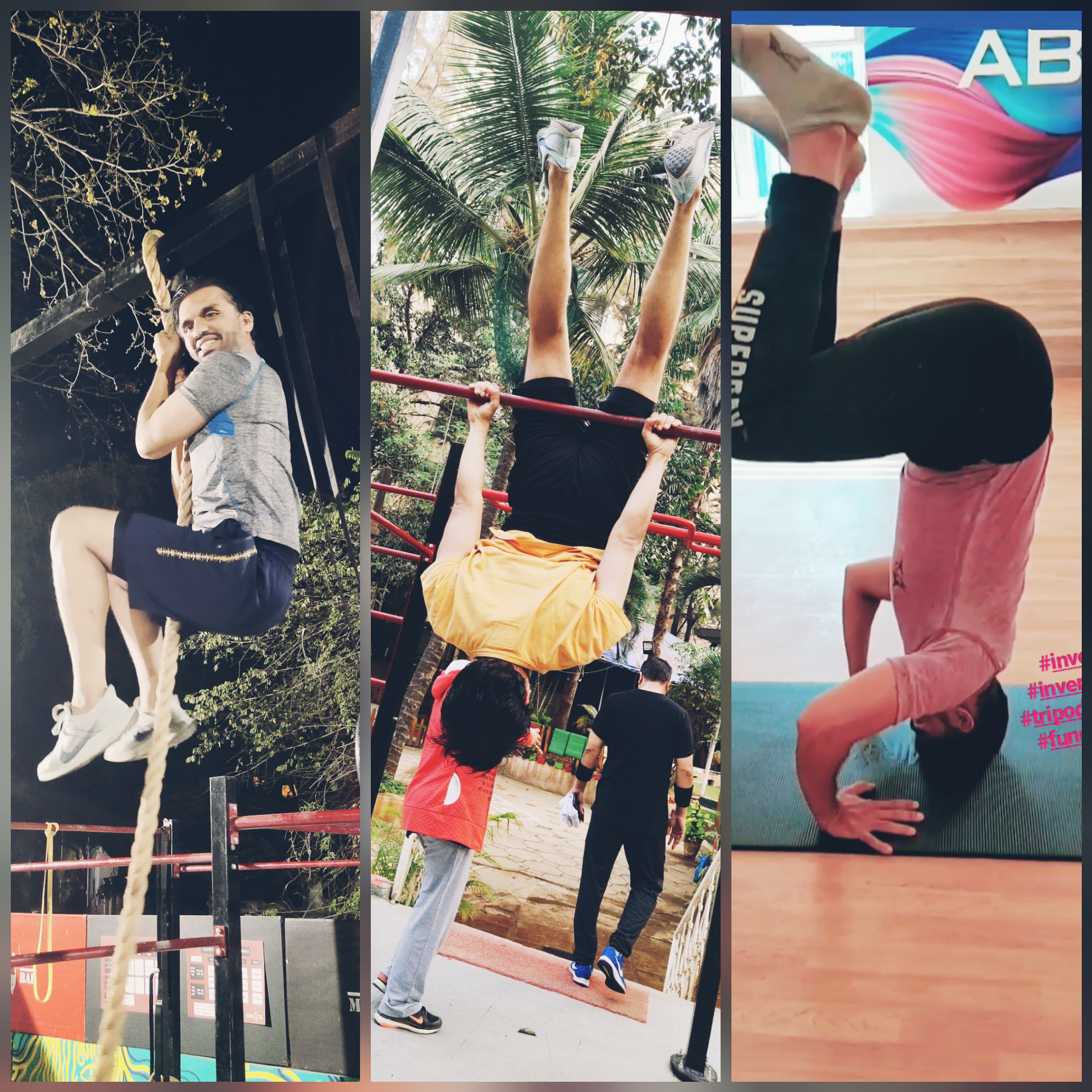
    On the exercise front its been the same routines mostly, I would spend time with Cross-Fit training, calisthenics, and Yoga. I have just added Sprinting lately. I have started including sprinting sessions for 1-2 times a week. I usually would do 13-18, 100 meter sprints to keep some HIIT going. To update about my progress, Yoga has helped me tremendously to help with union of things.  Yoga I have moved to another level in my class. My achievement is my back and over balance along with co-ordination have seen a lot of improvements. Slowly but steadily things are progressing. Calisthenics has been a important part as I have been able to develop decent body strength for being able to do a lot of end goals of Calisthenics. We very comfortably finish like 120-150 pull ups or 300-400 pushups on strength building days. Skills days have been fun as they usually motivate you with these fancy poses which you get surprised with. I will put up some pictures for you guys to check out.
    From what I have learnt in the last couple of years, I can conclude that you have to try a lot of variations with your exercise/sports routines to see what suits you best and you enjoy the most. Along with custom creating your meal plans as per your suitability so you achieve your goals. It goes to creating them more as a lifestyle than just a small term plan.
    Hopefully I am able to help some of you guys with my fitness journey. And can inspire some you too. Will keep you guys posted with this space further. Thank you for all the support. Until next time, I wish you all a happy and fit life too.
  • “Pain with reflection” = ” awesome Growth”!

    This is an idea has had a huge impact on me, a long time back unknowingly and now knowingly. I will try to discuss only the emotional pain, causes and some remedies to deal with it. Also, in many cases, even physical pain can be managed if we can handle the emotional pain well! 

    I always try to learn from the best minds in the respective areas, as books have helped to do that in a big way. But pain is one aspect which can be best learnt by our own selves. I have been reading a lot last year, life, philosophy(Hindu, Buddhism, Christianity, Sufism),  Work-related books, self-help, and sometimes fiction(read 21 books in 2018). I will try to get into the nitty-gritty from various sources, observations of people and of self. 

    The best we can do is embrace the pain and accept it to make our selves better. Pain is something we all try to avoid, we try to run away from it. Ones you encounter with pain, instead of ignoring, take it up in a way to enable you to find a solution for progress.  Ones you realize how effective it is to accept the pain in an open manner and reflect upon it, you will completely change the way you be in a painful situation next time. Instead of running away from it, we can accept it, identify it, reflect upon it and learn how to better ourselves and in turn deal better with it.

    Emotional Pain can be from any reason it can be caused by our Personal or professional life. When we do experience pain, we have two choices, either to accept it or continue in our delusion by ignoring it. The most important thing to keep in mind during these moments is “to catch hold of it with awareness without a reaction”. It’s definitely not easy to realize it in that particular moment. But we can definitely at least note it and reflect upon it later.  You would come across a lot of people who would gift you, “tough love”.  A lot of moments you would get your blind spots from others. It is also a fact we don’t readily accept our own weakness easily and are also not aware of them. A simple strategy can be helpful for this. If we accept our weakness does not mean that we become them. We are definitely not our weakness forever, it, in turn, gives you the opportunity to get better with. It can enable you to work our on solutions to enable progress. But always remember we can’t improve what we can see(our blind spots), which gives us an open reason to accept criticism without judgements.  

    We have been in tough and painful moments a lot of times. I have personally been in many unlimitedly, previously being driven by my unaware emotions, I have never been able to understand, the only thing I had done was an unconscious reaction. Even some of you may recollect some moments in your work dealings(daily activities), personal relationships(family, romantic, friends, colleagues, daily interactions, etc). Do any of them in your previous situations make you realize your own blind spots? If your answer is yes. We need to start embracing those uncomfortable situations in better ways, be assured the discomfort is temporary but the progress thereafter is “Awesome”. Its a tough choice we make at the moment of pain, the easier choice we have further.  

    A deeper understanding via scriptures of various books would help us know that pain does exist but we purely misunderstand it. The only problem in life and the pain is, life isn’t happening the way you want it to happen. Is there any other problem? If we look into a deeper perception, aren’t we just reacting to our sensory impressions stored within our minds? If we understand it further, we are just reacting to the thoughts which come into our minds stored previously from past experiences. A simple way to keep this point clear within us by understanding a basic rule, we are not our body, nor our mind which is created via unconscious impressions, neither our thoughts nor our pain. Thus, our pain cannot define us and identify to ourselves. The best way is to be proactively receptive to the pain without judgement and immediate unconscious reaction. It can be explained by a simple analogy, imagine yourself driving a car,  as a higher self than your hands(thoughts steering), accelerator(thoughts), now if you allow the accelerator, and steering controlling you, would you be able to drive safely? The same we can try hard not to get driven by our thoughts, mind, emotions, pain unconsciously.  Instead, just observe and react as per our control to have a sane and safe drive! 

    Just copying a useful quote:

    “A transition is always painful
    From filth to cleanliness
    From darkness to light
    From falsehood to truth
    However, the discomfort is temporary

    When you get used to the new state you wonder how and why you put up with filth, darkness and falsehood for so long
    You’ll never go back!”

    Also, I wrote about Errors, mistakes, previously, check it out. I suggest similar remedies like Yoga, Meditation, Conscious awareness, non-judgement to catch hold of the pain, reflect, act and progress awesomely! Cheers!

    References: Principles(Ray Dalio), My Gita(Devdutt Pattnaik), Power of Now(Eckhart Tolle), The Bible(Audio), and a lot of more books I have read and learnt from. 

  • Intuitions, Impulsiveness, errors, mistakes –– the science behind it!

    Intuitions, Impulsiveness, errors, mistakes –– the science behind it!

    I have been intuitive and impulsive for most of early life, which has got me into trouble on a lot of occasions. I have been lucky to receive tough love several times from special people in my life and realize some of my shortcomings. This leads me to read (have been able to finish 21 books in 10 months) books. I have never been a reader, thanks to Kindle and Audiobooks which has encouraged me to become more comfortable with books. The best part about books, is the best thinkers of the last few thousand years tell you their nuggets of wisdom. There are several ways you can apply and use the concepts you learn. I will just try to put in some techniques which could help in better decision-making process enabling to reduce mistakes and errors. Making a mistake is not a problem, not learning from mistakes is a problem, and must admit I have learned slowly. Building a foundation is hard work. The key here is brutal honesty with yourself about what you really know and applying yourself using the science you learn. I will try to point out the source/science of the process leading us to errors and mistakes from a few books I read.

    In the book “Thinking, Fast and Slow

    Daniel Kahneman shows how the mind works and offers practical and enlightening insights into how choices are made in both our business and personal lives–and how we can guard against the mental glitches that often get us into trouble.

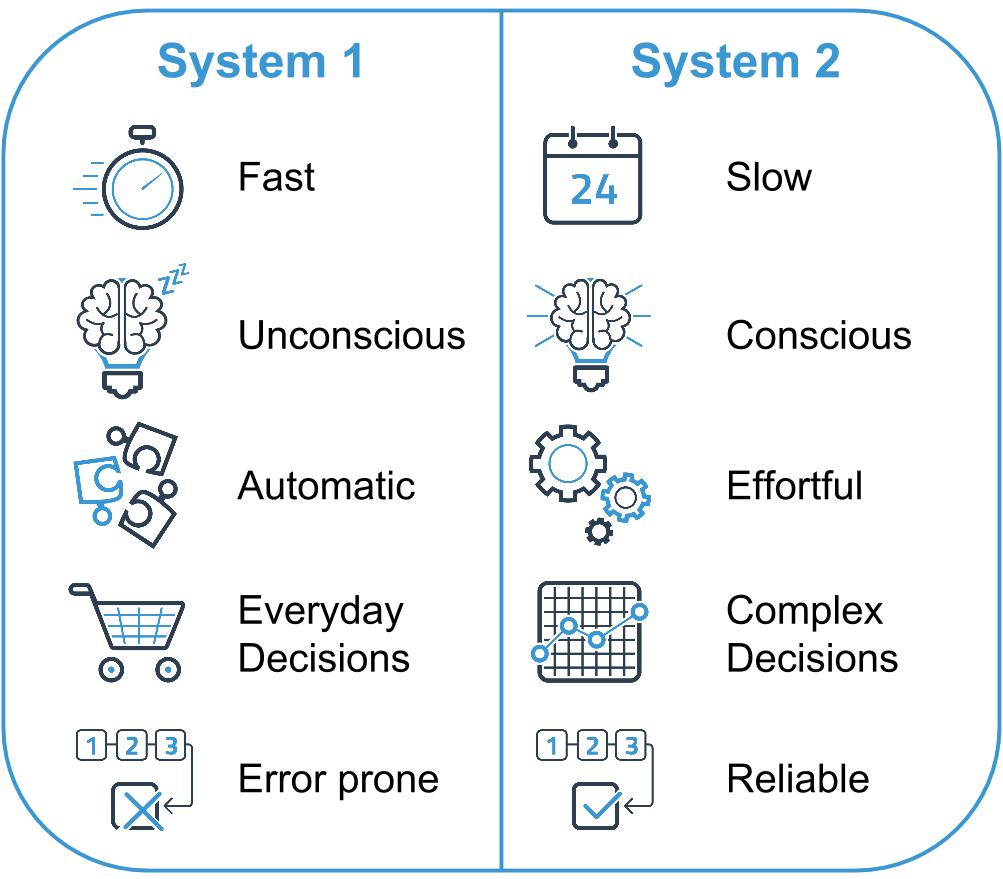
    Kahneman talks about two imaginary characters in our mind:

    System-1-vs-System-2

    We have an impulsive, emotional, and intuitive decision-making system he calls as System 1. A deliberative, reasoning, and (sometimes) rational decision-making system as System 2.

    He says “Intuition is nothing more and nothing less than recognition of these silent stored pieces of information. These are just thoughts which have been there before and not which you may like them to be. Intuition is the recognition of something we’ve seen before, we recognize a situation and we know how to respond because our brain sees the pattern and relates to them. Perhaps this results from direct experience (we’ve lived it, older conditioning, past experiences, Astro reason, or could be anything) without thinking to see if it’s the right situation to use System 1 or System 2.

    Kahneman describes several errors we commit in numerous life aspects, which causes us behavioural changes embedded within us. Here is a short list of some errors and mistakes which are made by fast thinking:

    • Fast thinking concludes that something must be appropriate if it is identified with pleasant feelings.
    • It focuses on existing evidence and neglects absent evidence (we don’t seek into longer-term causes and conditions, forget the context, don’t even ask what happened just before or what will happen next, and get into wrong views).
    • It suppresses doubt and neglects ambiguity.
    • It responds more strongly to losses than to gains, leading further to fears and unrealistic planning
    • It interprets and finds causes and intentions—innumerable relational messes begin here. Just imagine the number of situations in your life, which could have been better had a calmer and effortful mind system 2 be in place.
    • It generates a limited set of basic assessments that lead to ridiculous statements like “How hard is it to be a President?, Definitely I can do a better job in this case” because we only have a minimal idea of what it takes given our finite views coming from our tiny set of possible assessments/ observations.

    Here is an Example which he gives, if you are asked two questions, “Are you a good driver” and “Are you better than average as a driver?
    The answer to the first question comes easy as a Yes or a No. In most of the cases for the second answer, we would start comparing ourselves to an average driver, without even knowing anything about it and starting to relate to it and come up with an answer. The second answer is almost impossible to answer as it would mean us to know the details of calculating the average good driver skills of the whole world and then assessing our skills to come up with a somewhat close answer. It’s our general tendency to find a pattern and draw a conclusion without really putting in an effort to understand the actuality.

    The list goes on, a lot of his chapters are based on various study fields to provide detailed insights. And we are mostly blind to these events for the reasons cited above. Which of these do we fall into? How could we find out? Have we thought of reflecting and looking into those situations and learn from them? The next time you have a tough decision to make try putting yourself in someone else’ shoes. Ask yourself how they would handle the problem. Many of the messes we are in the middle of arising because we are unaware of the mischief of our autopilot mode thinking(system 1).

    We are continually making decisions even without we know. He emphasizes on slowing down be being more deliberate and logical before giving any kind of response to various situations in life. This ultra-useful hack could be very helpful in personal and professional life. Kahneman reveals where we can and cannot trust our intuitions and how we can tap into the benefits of slow thinking.

    It’s impossible to completely avoid errors and mistakes. After all, we are making thousands of decisions every day, many of them subconsciously and automatically. By automating the unimportant ones to system 1, you can spare the scarce resources of our System 2 brain and put in a conscious effort you’ll hopefully avoid errors in important decisions when the stakes are high.

    I will try to elaborate another author’s idea:

    We usually identify ourselves with the thoughts in our mind, where do these thoughts come from is a good question to ask. Thoughts emerge from consciousness and slip away as easily as they appear. Take, for example, the inner dialogue that occupies our monkey mind, have you ever noticed when tons of thoughts keep running continually in your mind? When you are in the middle of something and a sudden internal chatter gets ticked in your mind? The thoughts then just get registered with us without we know if they are really we need to keep with us.

    It’s just our general tendency to perceive any situation at a time. Your awareness registers what you see through your nervous system, yet your mind is compelled to add a dialogue about what it perceives, rather than just observing it with your awareness.

    In the book “The Power of Now: A Guide to Spiritual Enlightenment ” Eckhart Tolle says

    “People tend to dwell more on negative things than on good things. So the mind then becomes obsessed with negative things, with judgments, guilt, and anxiety produced by thoughts about the future and dwells in the past.”

    He makes another powerful point “Rather than being your thoughts and emotions, be the awareness behind them.

    The moment we identify ourselves with the thoughts and extend them more attention and get carried away, we drift into the boat with them. As we identify and attach ourselves to them, we flounder. We then believe in our thoughts rather than seeking to analyze what genuinely is appropriate and good in our situation. Flowing with the thoughts leads us to all kind of stress, suffering, errors, mistakes. The point he explains, is thoughts are not the true essence of who you are, the author then suggests a quick fix to the negative thought patterns.

    Eckhart Tolle says “Be present as the watcher of your mind — of your thoughts and emotions as well as your reactions in various situations. Be at least as interested in your reactions as in the situation or person that causes you to react.”

    Shunning the inner dialogue leading to dwelling into unneeded thoughts could be avoided by observing and letting go. To follow all our thoughts, which might not be even we intend to make us agree with them. Thoughts are influenced by our: beliefs, the past, moods, nutrition, illness, and level of consciousness he explains. By changing these where possible, we shift the intensity of future thoughts. I also read a line which got registered within me “Imagine a world where we witness thoughts without becoming them and experience feelings without being overwhelmed by them”.

    Practices like Yoga, Meditation, Mindfulness, awareness, could systematically slow down the nervous system, allowing more of the wisdom of our slower thinking to come forward and enabling us observing our thoughts rather than getting flown with them. Also, having regular breaks from continual work schedules to stop the momentum of our racing minds, could be even helpful. Spending time on personal reflection helps too. There is no one rule or formula to correct and perfect the path to errors, mistakes, decision making but the insights could make us conscious, aware and alert when we fall prey to such situations. My purpose was to just highlight the systematic errors we keep making and leave it there. To end here are two quotes from Socrates “The only true smartness is in knowing you know nothing.” and he also says I cannot teach anybody anything. I can only make them think”.

    This topic is a broad and complex one, I have just tried to gather up just a few fundamental points and put them across in a simple manner! Am thankful for you to spare your valuable time reading this article!

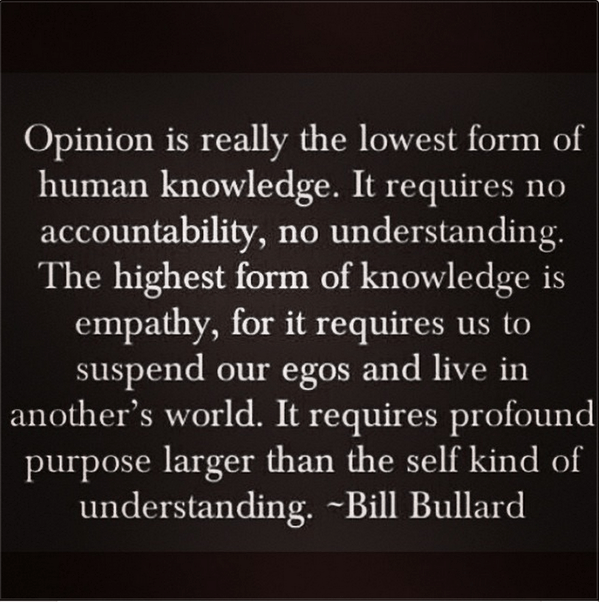
  • Opinion and Empathy: Bill Bullard

    Opinion and Empathy: Bill Bullard

    bill-bullard

    Happen to just come across this image, and it just hit me to the core. I just kept reading about Empathy and Opinions in so many places. It really did not make me understand to clearly, a lot of my Mentors and the Leaders I like and follow mention about Empathy, this one just got into the depth and so precisely clear for anyone to understand and relate it. I am just writing this post just as a reminder for myself also as I have been quite vulnerable, not able to understand people and get driven sometimes, so it gets registered with me totally as well. My last post of a drive on expressway which I experienced with a friend had hit me hard too. This quote in my daily life it helps to explain my thoughts so much, as well as helps me to understand others better too. I happen to interact with so many people in person and online as well(friends, family, customers, acquaintances, etc.), it just helps me keep connected with it.  Also through the years in my personal life, I can relate so much, and when I see real innate people with glimpses of such qualities, it just drives me to them and their cultures. I found this video which was kind of interesting,

    Just sharing the thoughts so even I could regularly be alerted.  Hope the QUOTE IMAGE and the video above helps you with some new insights for yourself as well 🙂 and sharing with some might get more smiles :). Thank you for reading this up.