Author: Pavan

  • The Evolution of UI/UX in Outcome-Oriented Models: Innovations Shaping Experiences with AI.

    The Evolution of UI/UX in Outcome-Oriented Models: Innovations Shaping Experiences with AI.

    Introduction:

    In the era of outcome-oriented models driven by AI and ML technologies, the landscape of UI/UX design is undergoing a profound transformation. As products and industries embrace declarative, outcome-driven approaches, the design principles governing user interfaces and experiences are evolving to meet the demands of a more personalized, intuitive, and context-aware digital world. Let’s explore how UI/UX may change in various industries and products:

    1. Personalization at Scale:

    • Outcome-Oriented Design: UI/UX designers are tasked with creating interfaces that prioritize user outcomes over predefined workflows. This shift towards outcome-oriented design requires a deeper understanding of user preferences, behaviors, and contexts to deliver personalized experiences.
    • Example: E-commerce platforms leverage AI-driven recommendation engines to personalize product discovery and shopping experiences based on individual preferences, browsing history, and purchase patterns, enhancing user engagement and conversion rates. Example from Walmart. Amazon employs AI-driven recommendation engines to personalize product discovery and shopping experiences for individual users, resulting in higher engagement and conversion rates.

    2. Context-Aware Interfaces:

    • Outcome-Oriented Design: UI/UX designers focus on building interfaces that adapt to users’ contexts and intentions, providing relevant information and features based on real-time data and situational cues. (Dynamic UI’s)
    • Example: Navigation apps like Google Maps utilize location data and machine learning algorithms to deliver context-aware directions and recommendations, optimizing the user experience for different travel scenarios and preferences. In CRM systems when the user will have contextual screens which will keep disappearing as the journey follows, for the JTBD’s and the goals the hyperpersonalised UI’s will keep guiding.

    3. Conversational Interfaces:

    • Outcome-Oriented Design: UI/UX designers design interfaces that facilitate natural language interactions, enabling users to communicate with AI-powered virtual assistants and chatbots to achieve specific outcomes.
    • Example: Virtual assistants like Amazon Alexa and Google Assistant offer conversational interfaces that allow users to perform tasks, get information, and control smart devices using voice commands, enhancing convenience and accessibility. This is how Walmart is using conversational AI. Also, for CRM case, a conversational bot to help the user continuously with the next goals and relevant JTBD for the them. The bot enabling them to fill forms/information needed to guide them, also guide them unlock more complex features.

    4. Data Visualization for Insights:

    • Outcome-Oriented Design: UI/UX designers create interfaces that present data and insights in a visually compelling and easy-to-understand manner, empowering users to derive actionable insights and make informed decisions.
    • Example: Business intelligence dashboards leverage interactive data visualizations and storytelling techniques to present complex analytics and trends, enabling users to uncover insights and drive strategic decisions effectively. Here I have personally used many tools to get text and visual outputs using simple conversational AI, think (ChatGPT analytics and visualization).

    5. Seamless Multi-Channel Experiences:

    • Outcome-Oriented Design: UI/UX designers craft interfaces that provide consistent and seamless experiences across multiple channels and devices, ensuring continuity and coherence in the user journey.
    • Example: Omni-channel retail experiences integrate physical stores, websites, mobile apps, and social media platforms to provide customers with a unified shopping experience, allowing them to seamlessly transition between online and offline channels. Here again Walmart has literally changed the interaction of users for in-store experience. Starbucks offers an omni-channel experience through its mobile app, allowing customers to order ahead, pay, and earn rewards seamlessly across online and offline touch points.

    Conclusion:

    As industries and products embrace outcome-oriented models driven by AI and ML technologies, the role of UI/UX design becomes increasingly critical in shaping user experiences that are personalized, context-aware, and intuitive. By adopting design principles that prioritize user outcomes, context-awareness, conversational interactions, data visualization, and seamless multi-channel experiences, UI/UX designers can create innovative interfaces that empower users to achieve their goals effectively and delightfully in the digital age.

  • Unlocking Growth: The Mashkor Journey

    Unlocking Growth: The Mashkor Journey

    Achieving 3x monthly run rate in user and revenue growth in just 18 months! 📈 Rarely shared publicly, but here’s the behind-the-scenes story of our remarkable journey. ✨

    Market Insight:

    • Kuwait’s population: 4.82 million, with 1.3 million local Kuwaitis and 3.2 million expats.
    • Kuwaiti Dinar is the highest valued currency globally, at 1KD = $3.2.

    User Insight:

    • Kuwaiti Nationals’ average income ranges from $35,000 to $110,000.
    • High spending power of locals, with a love for quality family time.
    • In Kuwait, around 60% of local Kuwaiti households hire house drivers to manage outdoor errands, including shopping and transporting goods.

    Product Insight:

    • Mashkor isn’t your typical delivery service; it’s an app where your personal shopper goes out and buys whatever you need.
    • Users can order from any shop, and our personal shoppers ensure seamless service.
    • Leveraging technology with AI and ML for personalized experiences, boosting activations and engagements by 40% and 30%, respectively.

    For my learnings, I have documented some product and growth strategies in small pieces on my blog.

    Summary: Enabling locals to reclaim quality family time by entrusting us with their outdoor errands and shopping experiences has been key to our success.

    Thanking Notes:

    • Community Angle: Grateful for the support and learnings from GrowthX and Reforge, and all my friends in these communities. 🙌
    • Team Support: A huge shoutout to my incredible team, especially Sangeeth, for their unwavering support.
    • CEO Appreciation: Special thanks to Fahad for his invaluable insights, resources, and support at every stage.

    This milestone wouldn’t have been possible without each and every one of you. Thank you for being part of this amazing journey! 🎉

  • Leveraging AI/ML to Enhance User Activation and Engagements.

    Leveraging AI/ML to Enhance User Activation and Engagements.

    Innovative strategies are crucial for maintaining a competitive edge, particularly in user engagement and activation. This post outlines our integration of Artificial Intelligence (AI) and Machine Learning (ML) to significantly impact user experience and business outcomes for Mashkor. Our primary focus was on optimizing the experience for both first-time and existing users.

    Need

    Our journey was driven by a clear goal: to elevate activation rates for first-time users while simultaneously enhancing engagement for our existing users of the application. The challenge extended beyond introducing users to our platform; we aimed to ensure they discovered immediate value, encouraging ongoing engagement and improve a deeper connection with our services. To meet these objectives, we turned to the capabilities of ML and AI, focussing to create a seamless, efficient, and valuable user journey from their initial interaction.

    Initial Solutions

    Our strategy was executed in phases, acknowledging the intricate nature of user behavior and the diverse spectrum of their requirements.

    Phase One: Personalized Recommendations for First-Time and Existing Users

    The first phase of our initiative involved harnessing ML to tailor recommendations for both first-time and existing users, using a variety of input parameters to fine-tune these suggestions.

    For new users, we focused on their search terms and category interactions as a primary indicator of their immediate needs and interests. This allowed us to present a curated list of the most relevant stores, aiming to improve CTRs and, consequently, conversion rates. Google Vertex AI’s recommendation model was our tool of choice for this task, selected for its algorithms, compatibility with our tech stack and ability to scale efficiently.

    In addition to addressing the needs of new users, we also refined our approach for existing users by analyzing their past behaviors. This analysis and inputs included various parameters that enriched the personalization of their recommendations. Given their history with our platform, we anticipated that the model would yield faster and more accurate results for these users, enhancing their overall experience and satisfaction.

    We just initially decided to focus on batch recommendations and later evolve to real time recommendations.

    Phase Two: Refining the Model

    The second phase focused on refining our model to better achieve our goals of increasing activation for new users and bolstering engagement for returning ones. This stage involved iterative adjustments and enhancements, driven by continuous feedback and performance analysis. We also employed Generative AI in certain scenarios to create compelling copy, further personalizing the user experience.

    Challenges

    Adopting to ML came with its set of challenges. Initially, the limited amount of available data constrained our models’ predictive accuracy. Moreover, the success of these AI-driven solutions heavily depends on the quality of data, emphasizing the importance of sophisticated data collection and management strategies.

    Benefits

    Over time, the benefits of our AI integration became increasingly evident. For first-time users, the AI-powered recommendations facilitated a smoother discovery process, significantly improving their initial engagement with our platform. Existing users enjoyed enhanced personalization through the “Recommended for You” feature, which evolved to more accurately reflect their preferences and behavior patterns. These experiments helped us understand the impact of AI and ML on creating a user-centric, personalized experience. Integrating into our product was challenging, fun and rewarding.

  • Optimizing the Activation loop iteratively to improve the conversion for Mashkor App.

    Optimizing the Activation loop iteratively to improve the conversion for Mashkor App.

    Introduction

    • Wanted to share the story of working with Mashkor for the initial 8 months working here about how we worked to improve the activation loop, using two frameworks.
    • First, focussing with a user centric approach: Engage with users, understand pain points, iteratively develop the product, and refine based on feedback. And secondly implement the, Amazon’s working backwards culture and processes to execute.

    Outcomes and Stories of Specific User Groups

    • House wives of Kuwait.
      • These users have shown tremendous appreciation for our services, finding immense value in the convenience we offer for their daily outdoor errands and shopping needs. Their feedback highlights how our app has become an integral part of their household management, enabling them to save time and focus on their families.
    • Busy office Workers.
      • This group values our app for the support it provides in managing their errands amidst hectic work schedules. They appreciate the efficiency and reliability of our services, allowing them to delegate tasks seamlessly and ensure their personal outdoor errands are handled promptly, even during their busy office hours and beyond.

    Goal: Improve conversion rate.

    • User Segmentation
      • Organic New Users: Individuals who download the app through word-of-mouth.
    • Pain Points Validation
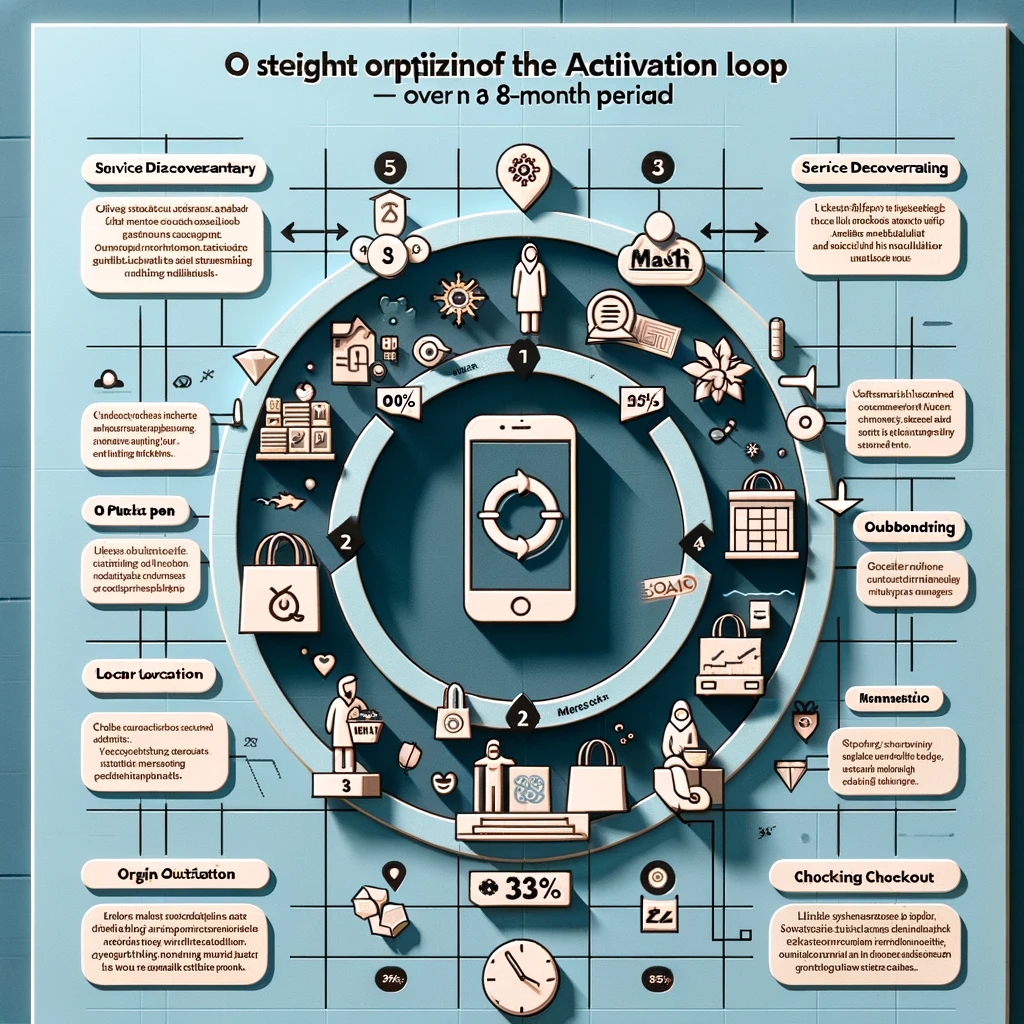
      • Key findings from qualitative and quantitative analyses with user research and product discovery phase revealed four major areas for improvement:
        • Service discoverability was low; core services were not immediately apparent to users.
        • Discovering and storing locations was cumbersome for users.
        • The cart and checkout process was overly complex, involving additional steps that deterred completion.
    • Iterative Solution Phases
      • Phase 1: Enhancing User Onboarding and Service Discovery
        • Objective: Make service discovery straightforward from the onboarding stage.
        • Strategies Implemented:
          • Revamped onboarding experience to prominently highlight services on the home page.
          • Introduced WhatsApp OTP as an alternative to SMS for verification.
          • Conducted A/B testing to optimize service discovery placements and design.
        • Success Metrics:
          • Increased adoption of WhatsApp OTP.
          • Higher click-through rates (CTRs) for service discovery.
          • Reduced time to conversion.
      • Phase 2: Streamlining Location Discovery and Storage
        • Objective: Simplify the process for users to find and store locations.
        • Strategies Implemented:
          • Integrated Google Maps for a more intuitive location search experience.
          • Simplified the selection process for Google-identified locations, requiring minimal additional information.
        • Success Metrics:
          • 80% success rate in selecting top location searches.
          • 90% efficiency in storing addresses.
          • Reduced time needed to store addresses.
      • Phase 3: Simplifying Cart Addition and Checkout Process
        • Objective: Make adding items to the cart and checking out smoother and more intuitive.
        • Strategies Implemented:
          • Overhauled the cart UX to consolidate steps and improve guidance.
          • Introduced Apple Pay to cater to user preferences and regional adoption.
        • Success Metrics:
          • 40% reduction in time to checkout.

    Conclusive Insights

    • Following these three phases and further optimizations led to 40% incremental improvement for conversion rate of.
    • The systematic framework emphasized understanding goals, breaking down problems, prioritizing impactful solutions, and iterating based on feedback.
    • This approach not only achieved the immediate objectives but also set a foundation for ongoing improvement and user satisfaction.
  • Unlocking Success with MVPs: Enhancing Customer Experience

    Wanted to share some learnings about MVP’s. In our fast-paced world of product and growth, especially for domain in our which is highly operation-driven business, the mantra was clear to test out ideas soon –
    MVPs (Minimum Viable Products) should make customers’ lives faster, easier, and less expensive


    Here’s a breakdown of how MVPs achieve these goals and why it matters, always tested using this framework:


    Faster:

    – Time-Saving Solutions: MVPs address specific pain points or tasks, enabling customers to accomplish their goals more efficiently.

    – Reduced Learning Curve: By prioritizing simplicity and ease of use, MVPs empower customers to quickly grasp and utilize the product’s core features.

    – Immediate Value: MVPs deliver immediate benefits, allowing customers to see results sooner rather than waiting for a fully developed product.


    Easier:

    – Simplified Solutions: MVPs eliminate unnecessary complexity, providing customers with a seamless and user-friendly experience.

    – Focused Features: By concentrating on essential functionality, MVPs alleviate decision fatigue and enable customers to focus on what truly matters.

    – Problem-Specific: MVPs target specific pain points, offering tailored solutions that address customers’ unique needs.


    Less Expensive:

    – Affordability: With lower price points, MVPs make valuable solutions accessible to a broader audience, driving adoption and market penetration.

    – Reduced Resource Costs: By streamlining features, MVPs require fewer resources from customers, minimizing time, effort, and financial investment.

    – Value for Investment: Customers perceive MVPs as cost-effective solutions that deliver tangible value without unnecessary frills, maximizing ROI.

    In conclusion, prioritizing customer-centric MVP development is key to unlocking success in product innovation. By making customers’ lives faster, easier, and less expensive, MVPs not only meet user expectations but also drive sustainable growth and market differentiation.

    We encourage our folks to test your MVPs quickly by leveraging user feedback loops and iteration cycles. Incorporate insights from real-world usage to refine and enhance your product rapidly.

    Feel free to share any insights, or any comments if any MVP’s got your surprised breakthroughs! 😉

    hashtag#Product hashtag#CustomerExperience hashtag#MVPStrategy

  • 🌱The Evolution to Product – Growth function.

    🌱The Evolution to Product – Growth function.


    Having received numerous inquiries from my network about the nuances between Growth Product leaders and traditional Product leaders, I thought to shed light on this topic from all the work I have been doing and how its differentiated from my previous approach.
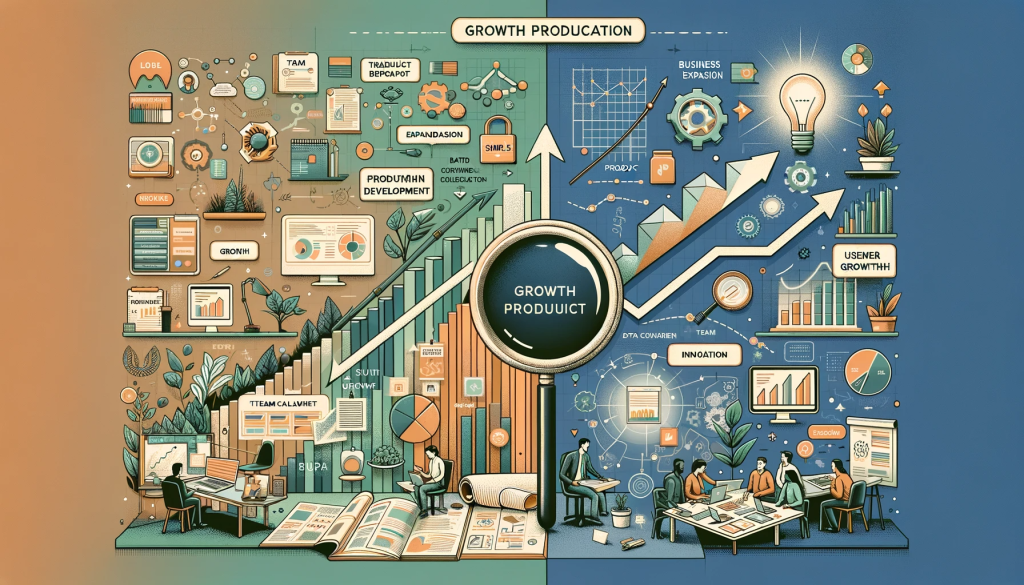
    The role of Growth Product function is at the crossroads of product development and business expansion. Here’s a glimpse into how this evolution has unfolded:

    → Beyond Product Development:
    While traditional Product Managers function focus on building and enhancing products, Growth Product Managers extend their scope to driving user acquisition, retention, and revenue growth. It’s about the entire product lifecycle, from ideation to sustained success.

    → Data-Driven Growth Strategies:
    Growth Product managers are proficient in leveraging data to identify growth opportunities. Analytics-driven insights fuel strategic decision-making, enabling them to optimize user journeys and maximize conversion rates.

    → Experimentation and Iteration:
    Embracing a culture of experimentation, Growth Product Managers constantly iterate on strategies. A/B testing, user feedback loops, and rapid experimentation are key tools in their arsenal to uncover what truly drives growth.

    → User-Centric Growth:
    Just as with Product Managers, understanding the user remains paramount. However, for Growth Product Managers, it goes beyond delivering a great product – it’s about crafting experiences that drive user engagement and conversion.

    → Collaboration with Marketing & Sales:
    Growth Product leaders work closely with marketing & sales counterparts to align product launches, campaigns, and user acquisition strategies, ensuring a cohesive approach.

    → Optimizing User Acquisition and retention channels:
    Identifying and optimizing the most effective user acquisition and retention channels is a key responsibility. Growth Product leaders analyze performance metrics to allocate resources where they deliver the highest impact.

    → Monetization Strategies:
    Revenue growth is a central focus. Growth Product Managers play a pivotal role in devising and implementing monetization strategies, ensuring sustainable business growth while delivering value to users.

    → Metrics-Driven Accountability:
    Growth Product Managers are held accountable for specific growth metrics. They establish clear KPIs, track performance rigorously, and pivot strategies based on real-time insights to achieve and exceed growth targets.

    By seamlessly blending product expertise with a growth mindset this function can navigate the intersection of innovation and business expansion.
    Feel free to share your comments about, the evolutions you have from your roles as compared to your previous way of working. Sharing more resources in the first comments.

    hashtag#productgrowth hashtag#productstrategy hashtag#growthstrategy hashtag#businessinnovation

  • Growth Strategy for Clear App- Learnings from Capstone.

    Growth Strategy for Clear App- Learnings from Capstone.

    In the 8-week boot camp project with GrowthX, after the four weeks of deep diving in modules, we had to apply the concepts and fundamentals we learned to real-time products. We got the opportunity to create a Growth Strategy for a product from Clear. (previously ClearTax). We were a group of 5 team members from varied backgrounds. Team members comprised a Founder, two PMs, a banker, and myself. We came from various backgrounds and specializations. We had to work together with a common goal to achieve a Growth roadmap for a potential tech product. 

    On a secondary note, we now had to learn, unlearn and implement the perceived values while working on the project. And a side note, we did have real fun during this period.

    Framework, Structure, and Metrics:

    GrowthX learnings gave us excellent frameworks and structures to follow, which helped us with our roadmaps to construct the growth strategy for the product. A unique understanding was the stages and metrics we can define at different product life cycle stages. The core idea is to focus on user journeys through penetration of business metrics along the Growth funnel. 

    It was time to apply our learnings from the last few weeks. I will try to add value with the unique pointers and the standard frameworks for Product life cycles.

    Problem Statement: 

    Clear tax is a very well-established brand in India. They have several products for various purposes and audiences. The product focussed on helping the SME audience for invoicing. 

    Goal: The product had 100k users. Our goal was to create a plan to 10x the users in 12 months.

    The product was already at stage 1. The product has a 70% Net Promoter Score(NPS). A fantastic definition for PMF, which I like, is “When people sell the product for you.”

    Understand and Define:

    User and Product Teams Insights: 

    We decided to reach out to Users, Product teams of our product, and some competitive products. We followed a structured questionnaire to help us have effective conversations and record our insights. This phase was one of the most crucial phases to get valuable pieces of information from different perspectives. 

    We structured our information right. Along with the expected data, the user insights helped us understand exciting features which the customers wish, giving us insights for all our phases. Here is a list of pointers we tried to collect from our users. 

    1. How did they discover the product? 
    2. Which features got them to move to use the product immediately. 
    3. Which features would enable them to add additional value while using the product? 
    4. How willing are they to refer and recommend the product? 

    The insights we collected formed the complete basis while working on our Growth roadmap. 

    We also got thirty minutes from the Product head from the Clear team. The company’s vision and plan notes enabled much better, more acceptable directions. 

    The User and Product team’s insights were a real eye-opener for the whole team. Here is a terrific read from Paul Graham speaking about why attention to users should be insanely important.

    Understand: 

    This module enabled us to provide a bird’ eye view of the project. We had worked on:

    1. To understand the core problems the product solves.
    2. We defined concise, precise, and real-time ICP’s. We kept them to three with broad perspectives. How the ICPs spent their time and money. 
    3. Total Addressable Market (TAM) calculations were one of the most vital parts. We created a bottom-up approach to get more granularity for our target market. 
    4. Define metrics about the expectations on the frequency of the product usage. 

    Define: 

    In this module, we had to define the key metrics and guesstimates for our Growth roadmap. Here is a small list. 

    1. Define the North Star metric. 
    2. The periodical goals. 
    3. The overall Growth model. 

    Acquisitions: 

    Our goal was to 10x the users – acquisitions had been the highest priority module to work. Acquisitions took away a lot of time to work with intricacies. Along with the standard channels, it helps us improve to spot practical acquisition approaches and tactics. Listing a few breakdowns: 

    Organic and Content Strategy channels

    Cleartax has already one of the best organic traffic to various platforms and products. They are one of the first players to start Programmatic SEO in the country. We defined and designed our strategies to take advantage of their already built-in traffic and additional content plan to scale this channel. This channel was within our low effort – high return estimates. 

    Paid Channels

    Usually, these are pretty standard methods for most companies. We also planned and decided upon some new experiments with new channels and approaches. 

    Content Loops

    Content loops are an uncanny method often missed or undervalued. We worked upon a few ideas: 

    • Educate the user basis on the use case of the product. 
    • Create valuable content for the users, which the users would distribute
    • Content created by and distributed by us as well.
    • The ideas while working during the content loop were unique and fun. 

      Referrals

    The power of referrals has worked numerous times for many products. Clear Tax brand the referrals loops were designed for several use cases to experiment. 


    Product Integrations

    We racked brains for a few ideas of acquiring users with Product integrations—a couple of ideas using Chrome Extension. A fun fact, there were distinct Product integration ideas we learned from our colleagues in other groups. 

    I should confess, working intensely in the Understand and Define modules helped us choose these platforms smartly. Along with the traditional media (Google, Linked In, Twitter), we learned some fascinating channels we could focus upon like Quora, B2B marketplaces, Youtube business leaders. The brainstorming sessions while working on the Acquisition modules were fruitful, along with intriguing working hours. We had clear goals to optimize CAC – LTV factors. Choosing the channels depended on Low Effort, Low Marginal CAC & High Flexibility. Choose a combination of the latest 2-3 factors for your acquisition channels. 

    A vital pattern to remember clearly is to experiment, record, analyze, and repeat.

    Onboarding

    This one was pretty smooth as compared to Acquisitions. While we tested the product for primary use. Here are some crucial points from the onboarding:  

    Aha Moments

    The product already had Aha moments. I experienced three places where the product added value. One specific moment when you add in a GSTIN number, the auto-population of data and next step to create an invoice directly was very smooth. We added a couple of ideas to improve upon and measure with experiments to convert the users into activated users. 

    Job to be Done(JTBD)

    We defined our JTBD very precisely to give us a clear understanding of the value the product solves. The goals were to clearly define and ease the user journey for the core functions of the JTBD. The main task was easy invoice generation. Some insights were collected in the user insights phase and implemented while working on this module. 

    Activations-

    We had a clear definition of defining the measurements of activation metrics for our product to give us a fair idea of whether the user is ready to start using the product.  

    Onboarding teardown

    Humans are with biases; our aha moments made me realize the importance of smooth transitioning for products. We gave detailed suggestions for improving the user experience and defining various metrics to capture the function and active users. 

    • We noted three recommendations in the flow to reduce confusion for users—one place to add more clarity. We noted down the experiments we could work on to test the flows out. 

    Engagement and Retention

    This module had to play a vital role in the product. We had related sub-products with this product. We had to define our strategy to blend it well with the company’s other products. 

    Segmentation-

    Just give a brief idea, here are some categories we separated our users, with natural frequency for their segmentation on different factors like:

    1. Invoices per month. 
    2. Usage of features like ledgers, payment reminders, and other add-on features. 
    3. Age of the users on the product.

    We defined campaigns to experiment with the various segment of users. We aimed to improve their engagements by adding value depending on the detail of the users. Here are a few ideas we noted:

    1. Setting up reminders for essential functions for users. 
    2. Enabling easy actions for necessary core activities. 
    3. Providing add-on features to make their core functions more attractive. 

    Churn and Resurrection– 

    We figured out the various reasons and metrics for user churn: defined frameworks to measure how users could get churned and methods to solve them. We worked upon simple resurrection campaigns to experiment with the churned users. 

    Monetisation: 

    This module was a little more straightforward for us. This product was more of an Onboarding strategy for the other core products of the company. We did not spend much time analyzing. Not to forget, the ideas we learned in the course with the examples for this module were enlightening. To summarise for this module, we just planned to test waters for our most addicted users to check their willingness to pay for the product. We also listed down a few experiments we would be running to test out monetizing our product. Here are some ideas we noted:

    1. Experimenting with providing additional add-on services. 
    2. Upsell-related products. 
    3. An installment payment feature. 

    Growth Teams and Processes-

    The whole process of spending those extra tedious hours/nights/days during this process was worth every. All of us were working full-time in jobs, but the willingness to not give up and support each other helped us work through the Capstone. It was enjoyable spending those precious time to get the Capstone completed. There was healthy competition for the Capstone projects amongst teams, and top teams showcased the work on demo days. 

  • Growth check!

    Growth check!

    I have been a Digital Marketing professional for eight years and specialized in SEO for seven years. I have worked with numerous varied projects to achieve results. I also have run websites for fun and flipped them after building them totally from scratch. I have done a lot of experimentation, data-driven actions, and metric monitoring to learn continually.

    rtCamp

    I work with rtCamp as a Digital Marketing consultant. It has been a significant work experience in my career. My learning has been innumerable in a very short time; I will create a separate write-up about it soon. rtCamp works with some of the biggest brands like Google, Automattic, Facebook, and many more. The organisations motto is “Good Work Good People,” evidently visible. rtCamp specializes in delivering enterprise success for web publishing and digital commerce. We are growing and hiring continually. Have a look at the careers section

    GrowthX

    For my next step to grow in my career, I wanted to expand my product growth and technology arena skills. While working remotely, I came across GrowthX. GrowthX is an online program with alumni as top Marketers, PMs, Founders from top companies. So I took up the 8-week weekend boot camp learning and applying the skills to live projects.

    Acquisition: Decision framework & deep dive into four major acquisition channels viz organic, ads, referral, product integrations. How to scale?

    Onboarding: Breakdown of how to design onboarding for web and mobile products

    Engagement & Retention: Different types of engagement frameworks. Learn about segmenting users to drive maximum engagement. Understand more about retention and reducing churn rates.

    Monetization: How to decide the framework to monetisation?

    Growth Teams & Processes: How to set up & evolve growth teams? How to build and nurture a growth culture?

    Capstone Project. A 3-week capstone project. The team works together to build an end-to-end growth strategy from acquisition to monetisation.

    Thats all for now; I will keep writing updates, hopefully! 🙂

  • First Surfing Lesson

    First Surfing Lesson

    My first surfing lesson.

    “You cant stop the waves, but you can learn to surf”. Taking my first surfing lesson. It did take me 90 minutes to learn and get it manageable. Ofcourse I crumbled a few times, But did get there!  Thanks to the team.

  • Physical Transformation

    Physical Transformation

    IMG_20200225_141258_226

                                                             Part-1 (Jan-18)

    Lately, I have been continually asked for inputs from a lot of friends, for the quick physical transformation in a short time. I have been able to lose 14 kg Body fat mass in 90 days. Average I could lose 5 kg each month. So I decided to jot down some information. I achieved it by setting simple goals and sincerely following habits. I will try to detail out what worked best for me.

    On the diet front, I had read about Paleo and Keto diets. I tried to blend my meals using a lot of useful information from both the diets. What worked best for me is to cut down sugars and starches (carbs, all white carbs). It helps in lowering your insulin levels, reduce your calories and makes to lose weight without hunger. Each meal usually consisted of Protein, Fat and Low Carb veggies. I would have them as much as I liked without any guilt, just kept a check on the overall days fat intake. I also was influenced by listening to a podcast from Gary Taubes. Gary has been researching heavily on the health industry from years. His revelations in some of his books enable you to give you are a clear picture of how various sugar industries evolved, as well as he has significant contributions on Good and Bad calories.  I would suggest you can search a lot of his books and read if you get a chance. Also, he has one another good read “Why we get fat“.

    Living in India, and the kind meals we have grown up with –– it was challenging to cut down on carbs in the first week, but gradually I managed them, and now enjoy the changes completely. Definitely, I did not cut down all carbs, as they are an important source of vital nutrients and energy. I just moved to the natural forms, going away from processed forms.

    On the physical activity front, I tried various ways. I worked out 1 hour daily almost 6 days a week. 5 days included 30 minutes of strength training and 30 minutes of cardio. I tried various combinations with strength training and cardio exercises. I tried to change weekly, switching between heavyweight and endurance strength training. Cardio activities would be running, use of traditional cardio machines, HIIT circuits, and somedays functional training as well. On Sunday or a holiday, a 2 hour of a hike or a run. (I would usually listen to a podcast or an audiobook to go along with it).

    Some other habits I followed is warm water and a black coffee or herbal tea in the morning. I had a high protein breakfast, increased fibre intake, enjoyed food slowly and a good night sleep which added fuel to my metabolism. Followed a 15/9 intermittent fasting and also tried for 36 hours ones. Cheated ones a week –– I usually have cakes and ice creams in one or two meals on the cheat day. I often gorge on dark chocolates(more than 90%).

    I could conclude that my goals were reached because of the habits I took up. The habits still allowed me to enjoy meals with my loved ones. This article Goals Vs Habits helped to get kickstarted not only for my health but also on a professional and personal growth. I am thankful and grateful for all the inputs and support from everyone around.

                                                Part-2 (Nov-18)

    Hello, again friends, almost a year back I started to take my health a little seriously. I have read, tried and experienced a few more ideas. I would be happy to share some updates and inputs. Hopefully, these updates would be useful further.
    One thing is sure, the older the problem, the older the solution. And health has been an ancient issue and supposedly we will find a solution there itself.  I am just updating some more inputs on diet and physical exercise.
    We human beings have evolved from the Stone age, Hunter-gatherers, agriculturist to the modern day sapiens we have become. When humans started to settle down in one place for a long time, farming activities took a course. From where grains and further processed food items evolved. These inputs come from an amazing book, Sapiens- A Brief history of Humankind. Supposedly, it gives us rational inputs for our beliefs and implements a solution to one of our oldest problem we have on health.
    Some practical tips which helped were eating more of fruits, vegetables, nuts, seeds and trying to avoid more of grains, dairy and highly processed food items. To be honest, for me to leave dairy becomes a little difficult as I do have cheese ones a week minimum. But the ideal way would be best if we can avoid dairy as well.
    On physical exercises front, I have been trying a lot of experimenting with Cross-Fit training, calisthenics, and Yoga. I have dedicated three days a week for Cross-Fit and Yoga. Cross-fit has enabled me with strengthening my core further, improving my agility and enabling with wonderful bodyweight movements. It involved more of circuit training, working on your multiple muscles together. Compound bodyweight exercises, with timely repetitions, have helped better. These endurance circuits enabled me to boost my metabolism and burn more calories in short limited work out time I get in my schedules. I would suggest, you can research a number of trainers and programs. It’s definitely worth the effort, as it would be more helpful in designing, executing and measuring your efforts.
    On Yoga front, I am in deep love with Yoga. I just got a small taste of it from a friend and then there was no looking back. I have been trying various forms of Yoga, I have tried a number of sessions with various trainers forms. I still a little naive to have a firm say on this, I will update ones I get some more practice and experience.
    I have also, started reading quite a bit on Yoga as well. It has helped me with slowly choosing Yoga as a Lifestyle, not just a physical activity. This topic can go very broad, I will try to write a separate blog post on it. I would just suggest, go for it, in whatever way you can. Just sharing some inputs on Yoga which could be helpful: BKS Iyengar says Yoga helps in the union of mind, body and inner self. Most pain in our bodies, external or internal, are due to compression and imbalances caused by tension or weakness. So, when you encounter a challenging pose or area in your body, instead of avoiding it with, breathe into it gently, let go and allow the area to open up and be free to invite circulation, health, and healing of mind, body and yourself.
    Sometimes we cling to delicious experiences we had in a previous experience, practice, or situation and expect to experience the same good feeling again, next time. Or we resist and have an aversion to getting onto the practice at all from challenging memories of the last practice. Instead, if we totally let go of past experiences of how a Yoga practice should feel or did feel and just open up to the present moment and experience the practice fully, it is always fresh and new. Try practising your Yoga poses daily as if you had never done them before, with open eyes, ears, curiosity, and a presence of mind and experience the magic.
    On Diet front, To brief a few points, from my last strict diet of following a Ketogenic, I have moved to a more relaxed diet of consuming more amount of Vegetables, Fruits (and yes I still do cheat with a big smile, and enjoy with my loved ones). From the diets available to follow, what I think Paleo would be a good pick to get going on. And on the exercise front, I have added Cross-fit and Yoga along with some weight training to my routines. Will update this article in the new year. Till then, have a wonderful year. Thank you again for reading and your precious time.
    inCollage_20200303_003923454
                     Part-3(Jan-2020)
    Hello again friends, I just wanted to maintain this a personal accountability section for my fitness journey as well. It’s been a while since I have been writing. I have changed quite a few things in my Diet and Exercise routine. I have been continually experimenting with a lot of things and figured various ways where I could stick to for a long run. After a long time I did realise fitness is a very personal and customised process for every individual. My routines may have changed continually, but has given me immense knowledge with my personal experience. So whenever people to ask me about some tips, I just share some basic tips and conclude that you to have a custom routine with respect to your circumstances, situations and choices. It is important as I would always suggest it becomes a lifetime addiction than just a short term goal.
    On the diet front I have stopped all the typecast diets such as Keto, Paleo which I did mention in my part-2 section of this article. I have been working to keep my food as less processed as possible. Focusing more on less whole foods. I have been experimenting with having grains regularly. Comprising a few noon meals of Lentils/Rice to boost my metabolism. Definitely sugars just have been for my cheat meals only. I have been a little easy on Intermittent fasting as I did realise that even having a balanced diet with making sure the body is in a calorie-deficit mode most of the times. This by any chance does not mean I defy myself from anything but do have small meals as per my conveniences. As my work routines and travel routines have been a little up-down I tried to experiment with such routines.
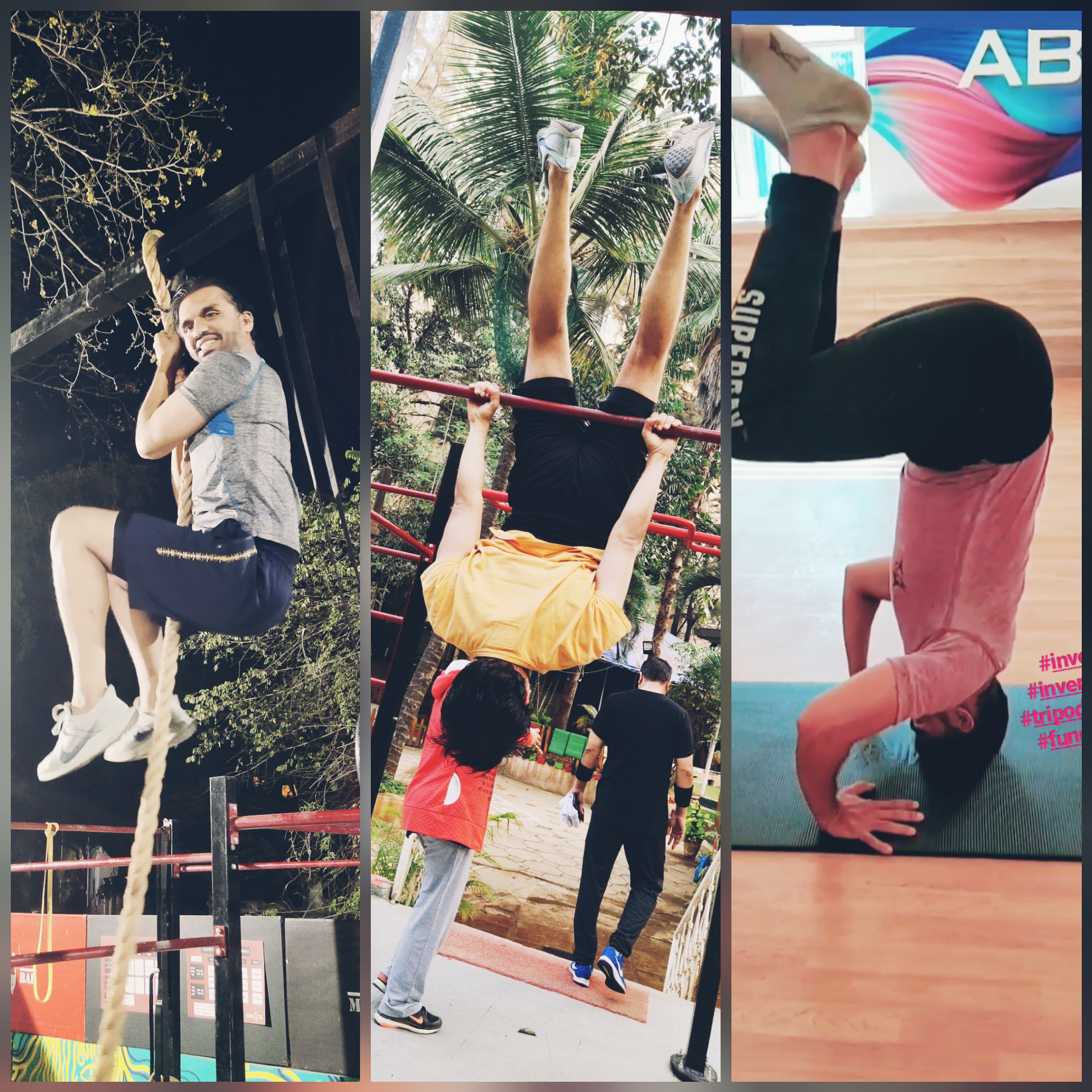
    On the exercise front its been the same routines mostly, I would spend time with Cross-Fit training, calisthenics, and Yoga. I have just added Sprinting lately. I have started including sprinting sessions for 1-2 times a week. I usually would do 13-18, 100 meter sprints to keep some HIIT going. To update about my progress, Yoga has helped me tremendously to help with union of things.  Yoga I have moved to another level in my class. My achievement is my back and over balance along with co-ordination have seen a lot of improvements. Slowly but steadily things are progressing. Calisthenics has been a important part as I have been able to develop decent body strength for being able to do a lot of end goals of Calisthenics. We very comfortably finish like 120-150 pull ups or 300-400 pushups on strength building days. Skills days have been fun as they usually motivate you with these fancy poses which you get surprised with. I will put up some pictures for you guys to check out.
    From what I have learnt in the last couple of years, I can conclude that you have to try a lot of variations with your exercise/sports routines to see what suits you best and you enjoy the most. Along with custom creating your meal plans as per your suitability so you achieve your goals. It goes to creating them more as a lifestyle than just a small term plan.
    Hopefully I am able to help some of you guys with my fitness journey. And can inspire some you too. Will keep you guys posted with this space further. Thank you for all the support. Until next time, I wish you all a happy and fit life too.